Biography
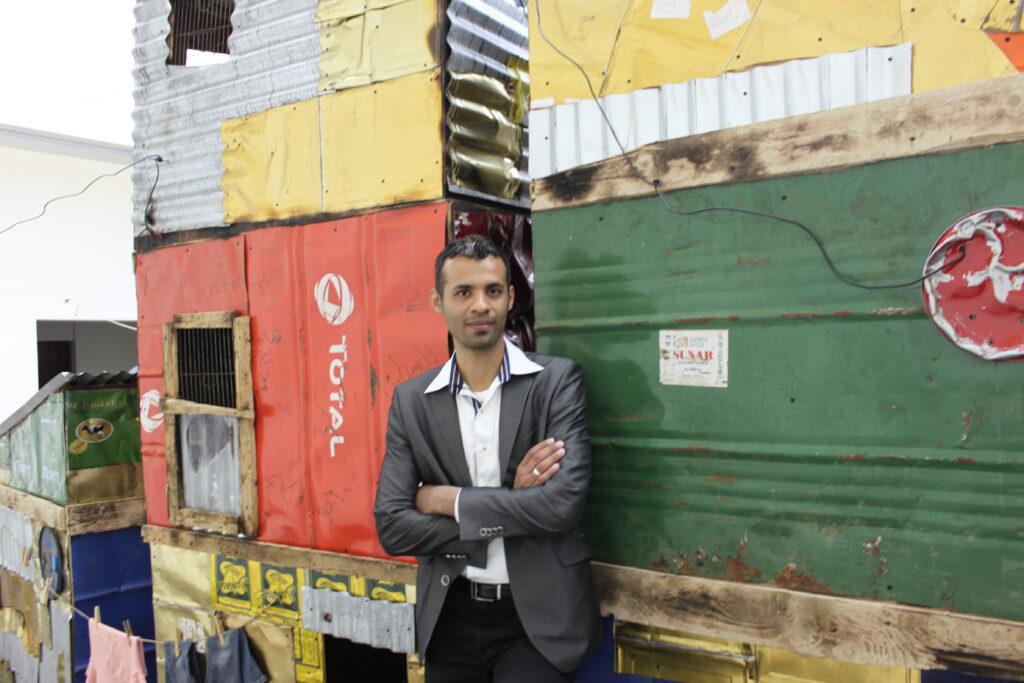
Abdulrahman Katanani, born in 1983 in the Sabra refugee camp in Beirut, Lebanon, is a contemporary Palestinian visual artist whose work profoundly reflects his experiences as a third-generation refugee. His grandparents fled Jaffa in Palestine during the Nakba in 1948, settling in Shatila, where Katanani’s early life was marked by the traumatic aftermath of the 1982 Sabra and Shatila massacre.
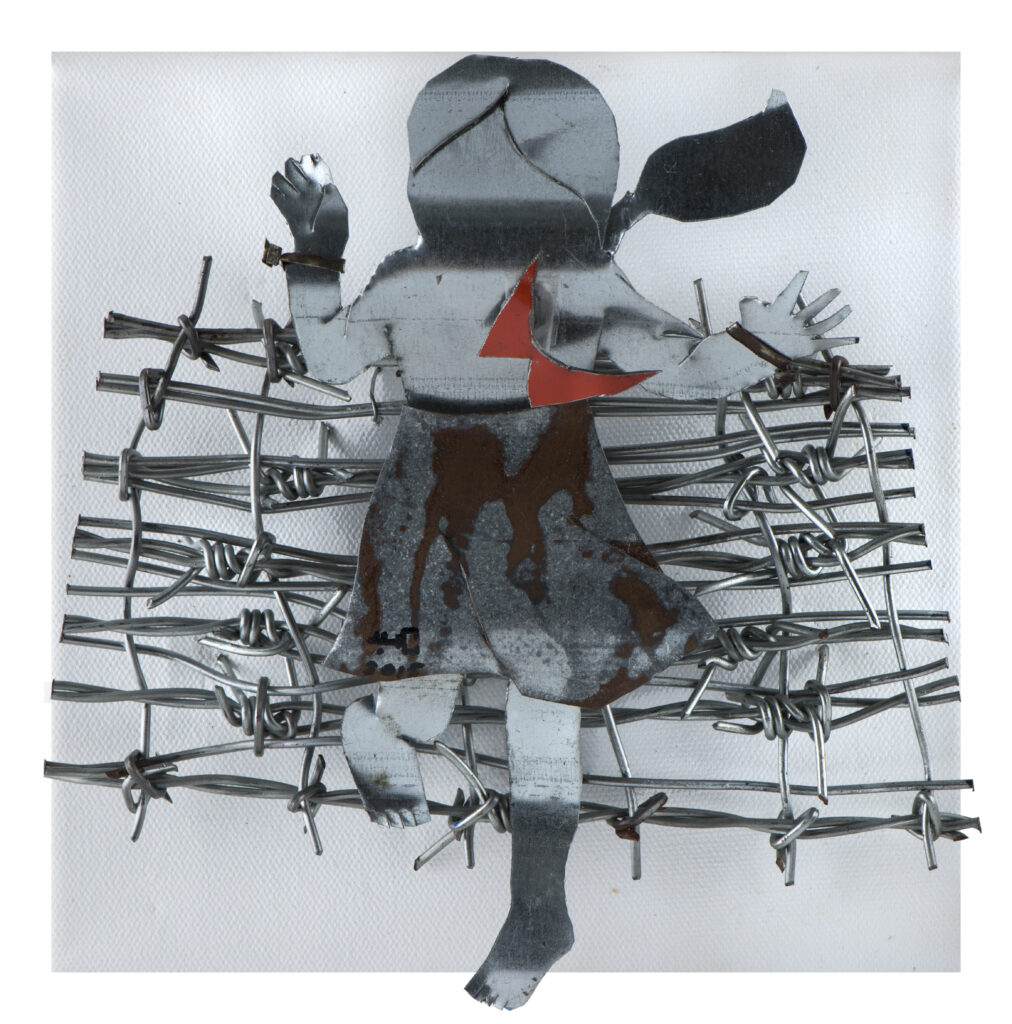
Katanani began his artistic journey by painting graffiti murals and drawing caricatures in the refugee camp, such as “al-fida’i” (the freedom fighter). He earned a diploma in Fine Arts from the Lebanese University in Beirut in 2007 and an MFA specializing in Palestinian contemporary art in 2012. His art practice involves collecting discarded materials from the camp, like barbed wire, metal shutters, and car parts, to create sculptures and installations that transcend the rawness of these objects. Through his manipulation of rigid materials, Katanani explores themes of movement, resistance, and cultural oppression, revealing his ability to rise above the trenches.
Katanani’s work challenges typical perceptions of refugee camps, encouraging viewers to envision joy, life, children’s play, dancing, flowers, education, and daily struggles within confined spaces. In 2009, he was awarded the Young Artist Prize at the Autumn Salon organized by the Sursock Museum in Beirut. His works have been exhibited globally at institutions such as the Abu Dhabi Biennale, the Royal College of Art in London, the Cité Internationale des Arts, and the Institut du Monde Arabe in Paris. His art is also held in public collections, including Mathaf in Doha, and in various private collections.
Artwork